
Yoga three-part breath
Apr 26, 2026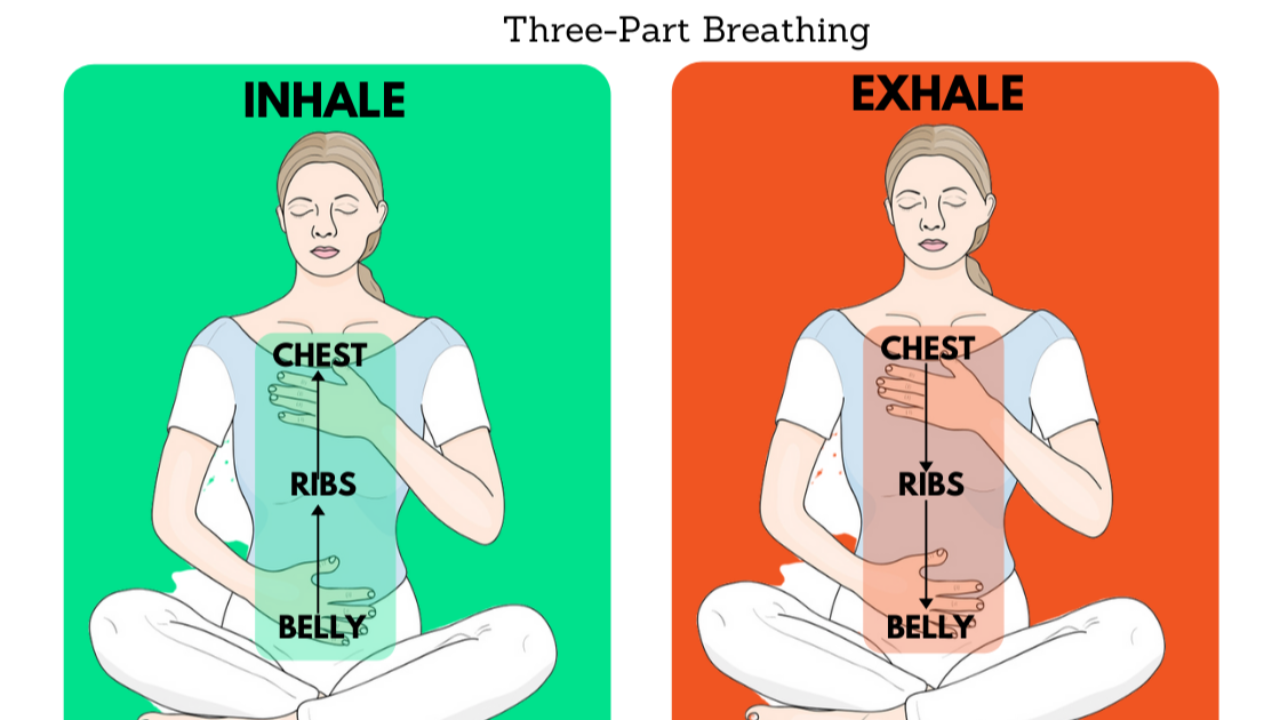
Yoga Three-Part-Breath
One of the most common pieces of feedback I receive when teaching yoga, from beginners, as well as yogis of all abilities, is their difficultly with yoga three-part-breath. Specifically, the direction the abdomen should move in.
The “natural” way to breathe (how we come out of the womb breathing) involves the abdomen expanding on the inhale and pulling in on the exhale. Many people tend to lose this pattern over time and take more shallow breaths that don’t use the abdomen or they suck the abdomen in on the inhale as a habit.
Yoga three-part breath is also known as dirga (meaning "complete" or "long") pranayama or, simply, as yoga or yogic breath. The three parts of the breath are the abdomen, rib cage and collar bones; the breath involves the whole of the torso.
There are multiple benefits to learning three-part breath and incorporating it into your yoga practice & daily life. Three-part breath is thought to improve lung capacity and respiratory function, enhance mindfulness, reduce anxiety, reduce stress hormones by activating the parasympathetic nervous system ("rest & digest"), improve circulation, help with emotional regulation & prepare the body for meditation.
How to practice yoga three-part breath
- Find a comfortable posture (seated or lying – use support and props as needed)
- I like to start with a body scan to check in with my body and release any tension or tightness I am carrying. Start by bringing awareness to the crown of the head and asking the muscles here to release, work your way slowly down the body to the tips of the toes. If anything feels tight or “blocked” take some extra time to breathe into this area and release.
- Start by noticing your natural breath as it enters and leaves the body. Try to hold your awareness here for a few moments (this may be difficult if you have a lot on your mind, acknowledge any thoughts that come to mind and try to guide your awareness back to your breath).
- Place both hands onto your abdomen. Notice how your natural breath moves your hands as you breathe in and out.
- As you inhale, practice taking the breath into the abdomen, allowing it to expand and pressing against the hands. As you exhale, pull the abdomen in, away from the hands. You may also benefit from trying to experience this part of the breath in the pelvic floor muscles; as you exhale, squeeze the pelvic floor up and under (from back to front), as you inhale, release the pelvic floor. Take some time here to get used to this movement; notice how it feels.
- Move your hands to your lower ribs. As you inhale notice the ribs lifting into the hands, as you exhale, notice how the ribs lower. This may be a very slight movement. Take some time here.
- Move your hands to your collar bones. As you inhale try to feel your collar bones lift against your hands, as you exhale, notice the collar bones move aware from the hands. Take some time here.
- Move your hands back to your abdomen and as you breathe let the hands travel up and down the body; from the abdomen, to the ribs, to the collar bones and back down.
- When you feel comfortable with the pattern, move your hands to the side of your body with your palms upwards and continue with yoga three-part breath.
If you still struggle:
- Try turning on to all 4s, keep your back completely still and try to isolate the abdominal muscles. As you inhale, let the muscles completely release down towards the earth. As you exhale “zip up” the pelvic floor and pull the abdominal muscles up and under. Inhale and completely release.
- Make sure you are as relaxed as possible, especially around the pelvis, abdomen and chest – you may benefit from a bath or some gentle yoga postures if you are feeling tight.
- Go back to noticing your natural breath at any time. Don’t put pressure on yourself if it’s not flowing. Just slowing the breath & becoming aware of it are beneficial breathing practices for stress relief and calming.
Overall, take some time to work with the movement of the abdomen & ribs. Don’t try to force it, relax and let the practice flow.
Lorem ipsum dolor sit amet, consectetur adipiscing elit. Cras sed sapien quam. Sed dapibus est id enim facilisis, at posuere turpis adipiscing. Quisque sit amet dui dui.
Stay connected with news and updates!
Join our mailing list to receive the latest news and updates from our team.
Don't worry, your information will not be shared.
We hate SPAM. We will never sell your information, for any reason.
